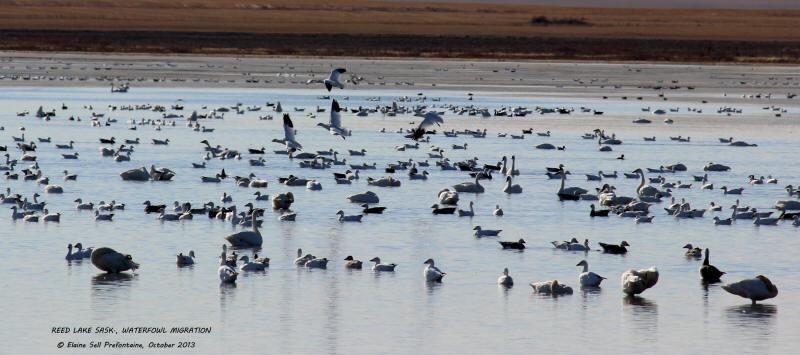
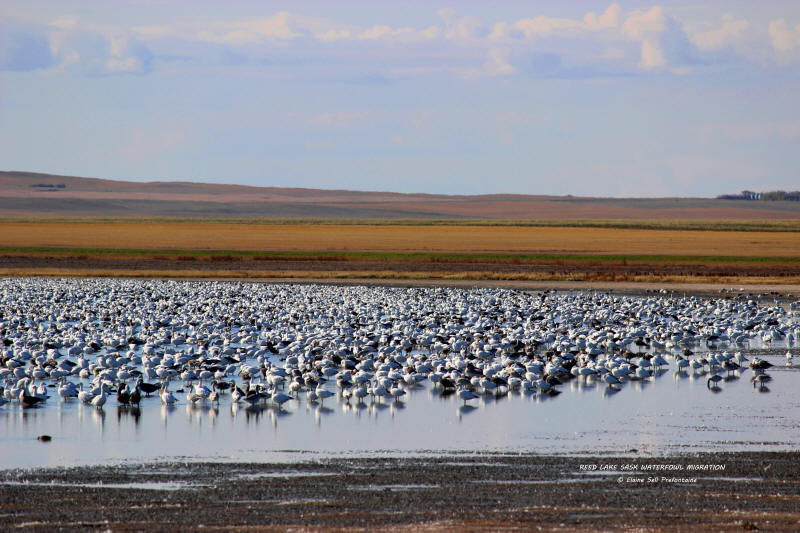
REED LAKE
SASKATCHEWAN WATERFOWL MIGRATION
October 2013
Please Click on
Great Blue Heron Page to View
Heron Photos !
PINE GROSBEAK
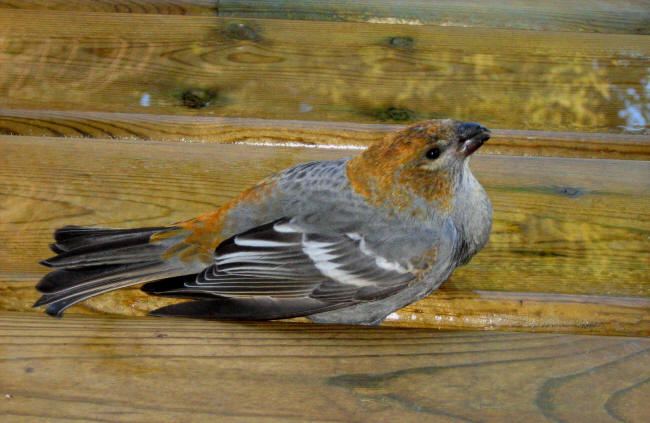
PINE GROSBEAK
This
beautiful Pine Grosbeak flew into my patio door glass and was stunned.
My kitty who was out on the back deck at the time was pretty excited about
that so I quickly scooped her up and brought her indoors.
With the bird being now out of harms way I was then able to photograph it.
Such striking coloring!
The stunned bird rested on my back deck for about an hour
before it had recovered enough to fly away.
Pine Grosbeaks are migrating this time of the year and come in flocks to feast
on the berries of my ornamental crab tree.
What a little beauty!
November 18, 2012
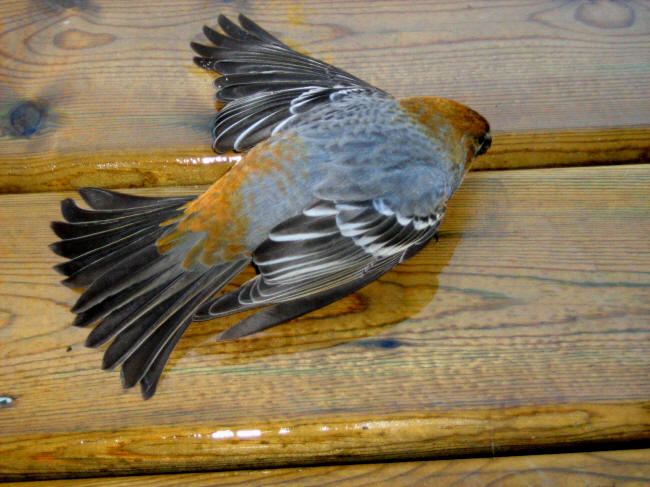
STUNNED PINE GROSBEAK
WILD TURKEYS
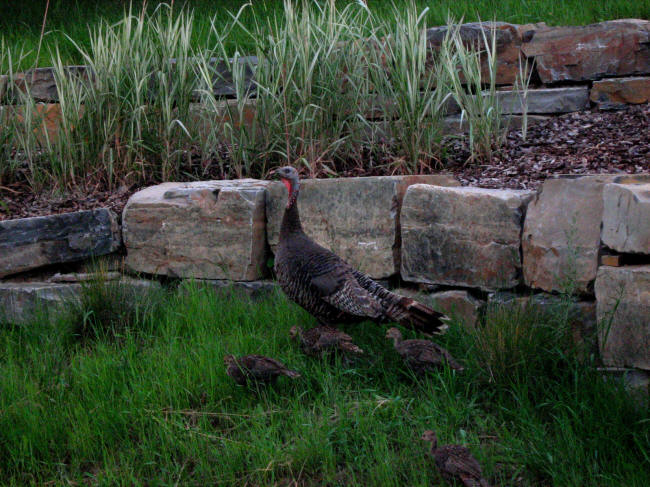
WILD TURKEY HEN AND POULTS
Saw this not so wild "Wild Turkey Hen and Her Four Little Poults" near the
Columbia Lake Road.
She just looked at me, made a cluck-cluck at her little ones and kept walking as
I took photos.
July 14, 2012
DUCKS
AND LOONS
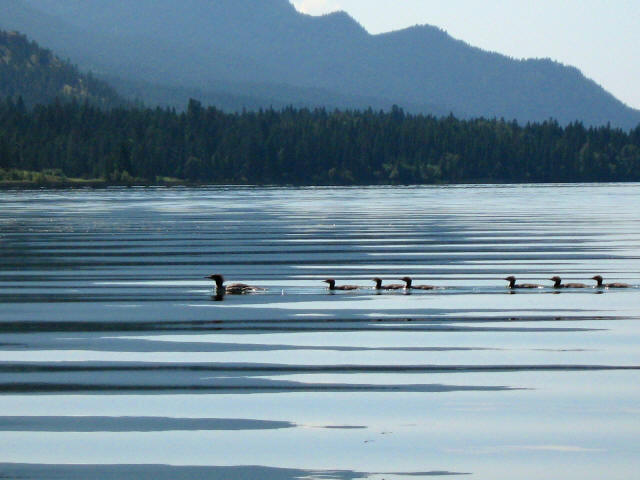
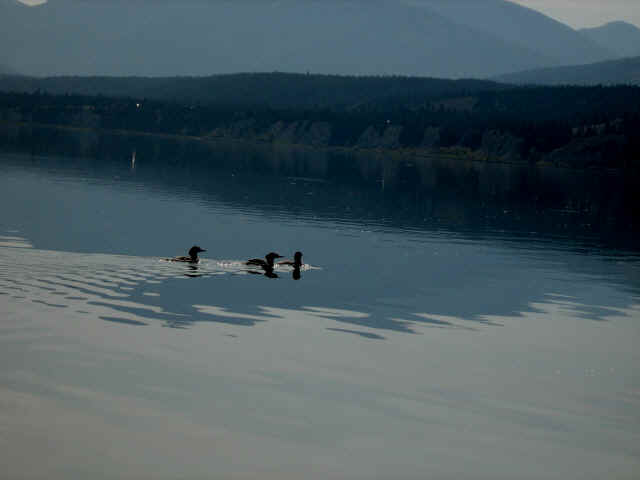
FOLLOWING MOM
Columbia Lake, British Columbia, Canada
Digital Photo, July 26, 2012
Columbia Lake, British Columbia, Canada
Digital Photo, September 16, 2008
PILEATED WOODPECKERS
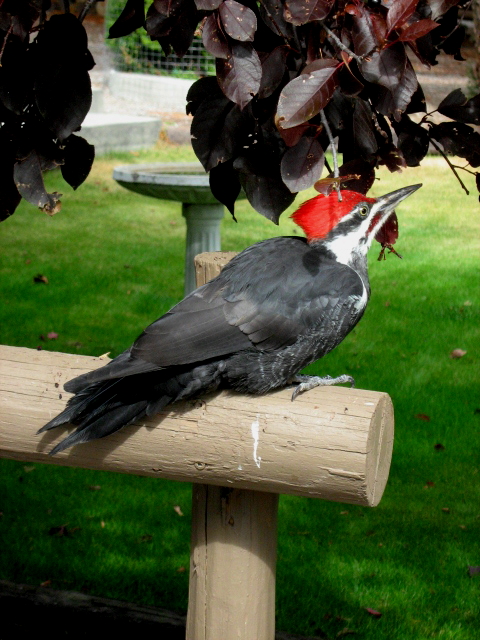
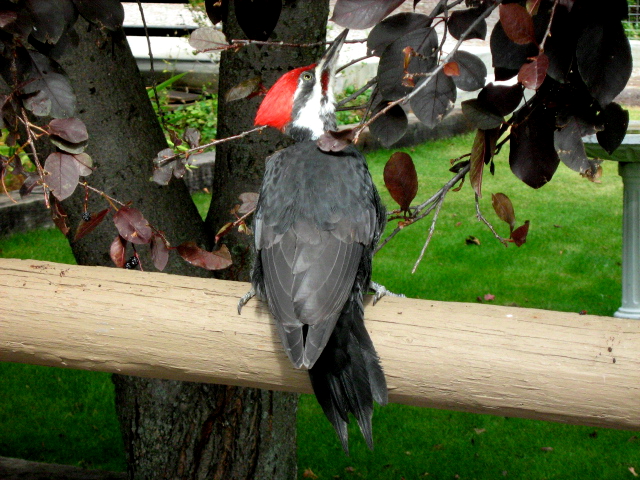
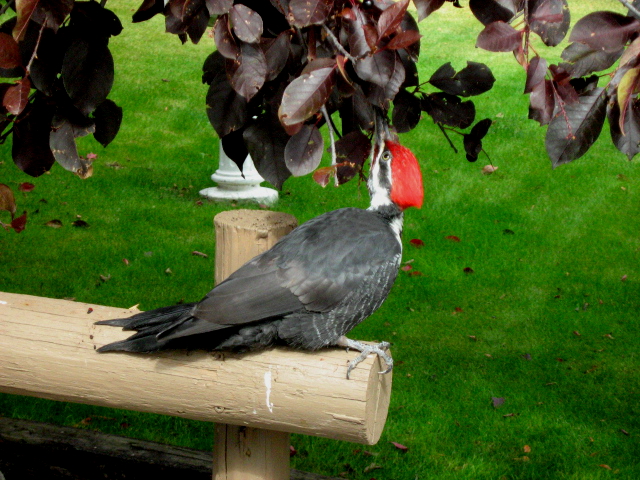
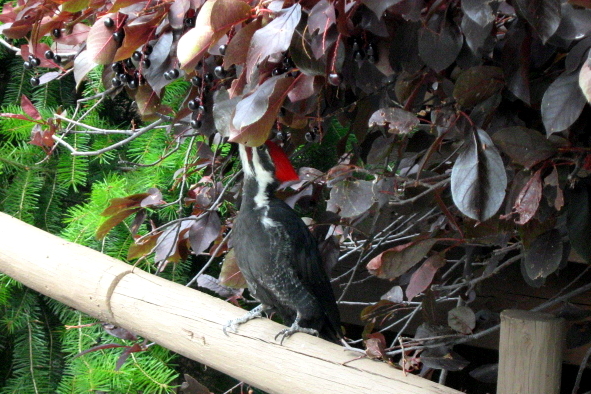
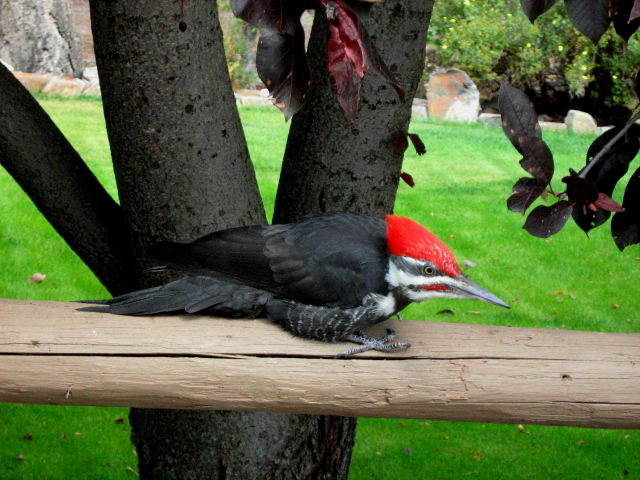
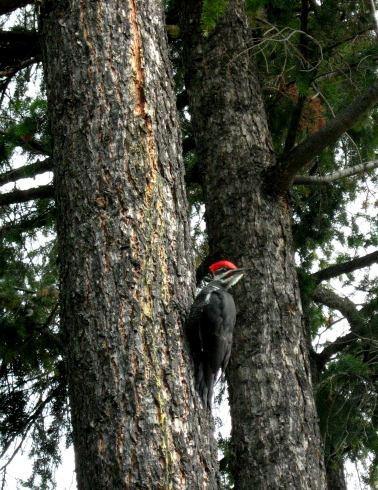
PILEATED WOODPECKER VISITS MY CHOKECHERRY TREE
September 17, 2010
Photos taken at my Cabin in
Columere Park (A Private Community)
Columbia Lake, British Columbia, Canada
PILEATED WOODPECKER SIZES UP THE CHOKECHERY SELECTION
September 17, 2010
PILEATED WOODPECKER REACHES FOR A CHOKECHERRY
September 17, 2010
GETTING AT THOSE YUMMY CHOKECHERRIES
September 17, 2010
WHAT A BEAUTY YOU ARE !
September 17, 2010
|
.. |
A HIGHER PERCH IN ANOTHER TREE
WHERE THERE ARE INSECTS TO
EAT
September 17, 2010
See
NATURE NOTES
and a few
Pileated Woodpecker-in-Winter photos at the bottom of this page.
RUFOUS HUMMINGBIRDS
|
..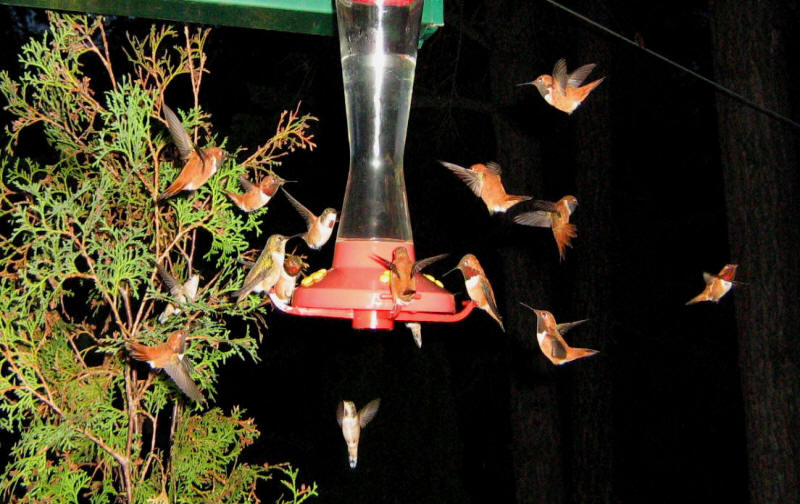 |
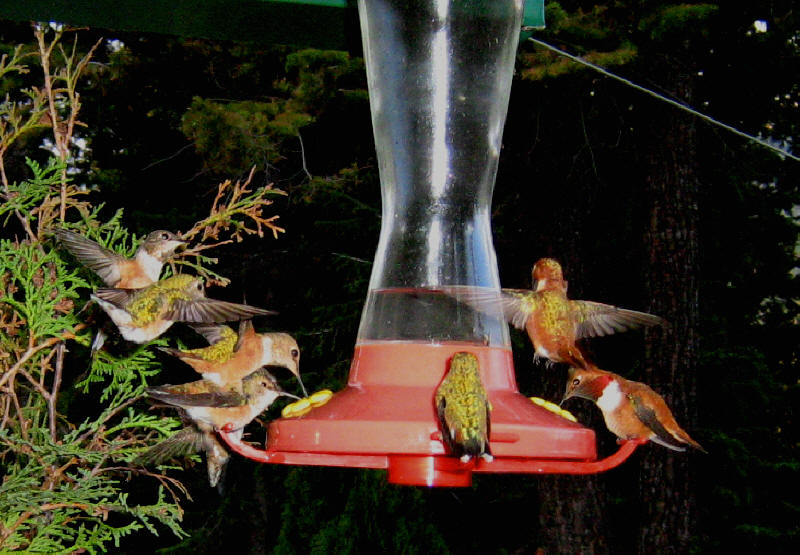
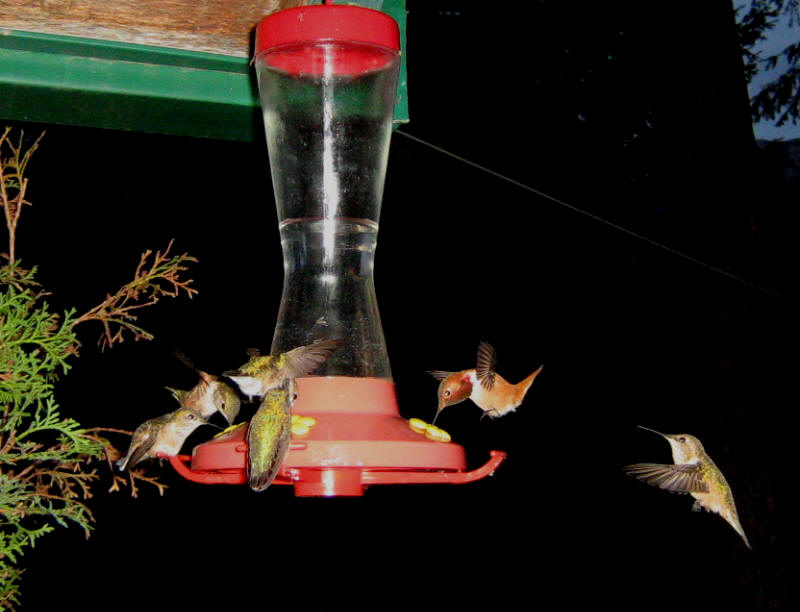
15 HUMMERS AND A TAIL - AND THAT'S NO TALE
Hummingbirds at my feeder
9:30 p.m.,
May
22, 2010
Photo Taken at my Cabin in
Columere Park (A Private Community)
Columbia Lake, British Columbia, Canada
We can see the bottom of a
hummer tail at the right behind and below the feeder
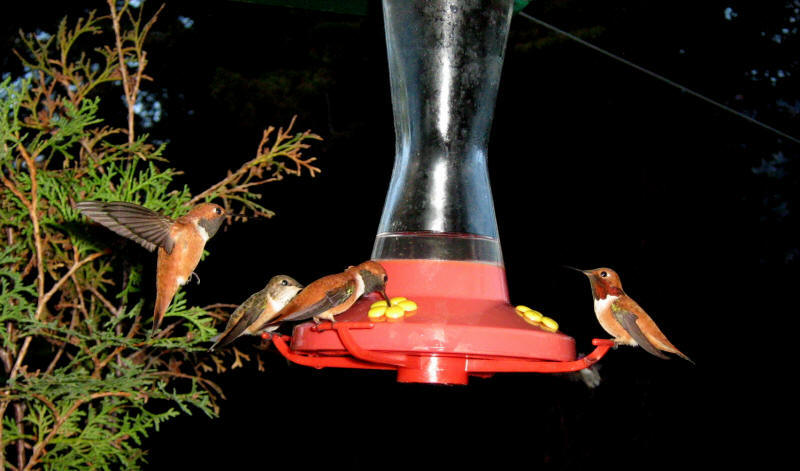
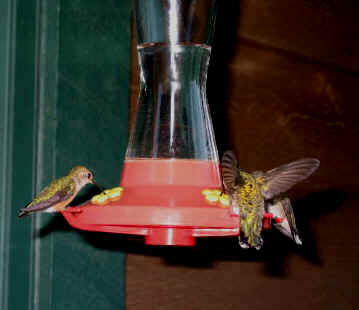
DOUBLE DIPPING HUMMERS ON THE LEFT
Hummingbirds at my feeder
May
22, 2010
Photo Taken at my cabin in
Columere Park (A Private Community)
Columbia Lake, British Columbia, Canada
BEAUTIFUL
May 23, 2010
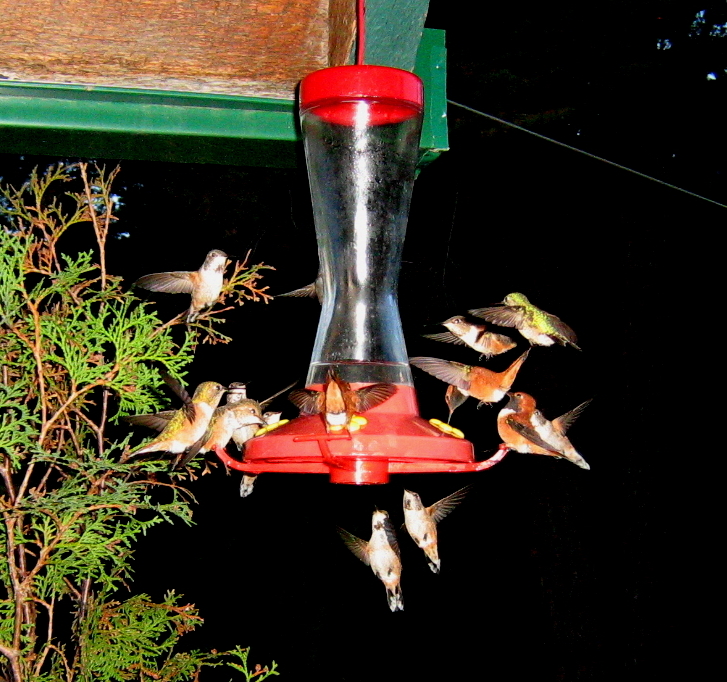
14 BEAUTIES COMING TO
DINNER
May 23, 2010
MORE
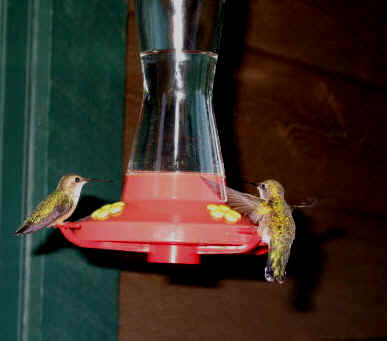
DOUBLE DIPPERS ON THE LEFT
Hummingbirds at my feeder
May
26, 2010
Photo Taken at my cabin in
Columere Park (A Private Community)
Columbia Lake, British Columbia, Canada
________________________________________
Digital
Photography by Elaine Sell Prefontaine
________________________________________
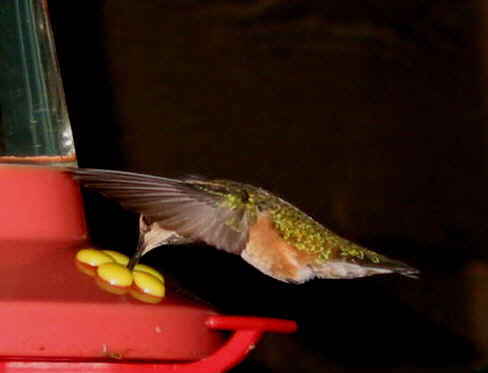
'Rufous
Hummingbird'
(Selasphorus rufus)
Digital Photos, May 2005
Photos Taken at my cabin in
Columere Park (A Private Community)
Columbia Lake, British Columbia, Canada
NATURE NOTES:
'Rufous
Hummingbird' ((Selasphorus rufus)
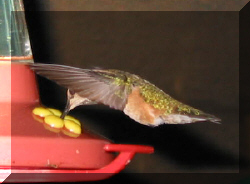
Size: 3 to 4" in Length
The Female (above) is
identified by her beautiful metallic bronze-green back, cinnamon rufous sides with white
under tail coverts.
The female and immature are very similar to the Allen's Hummingbird but have
browner and wider outer tail feathers.
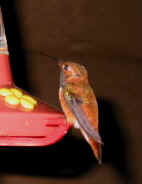
The Male (below) is identified by his metallic bronze-green
crown, iridescent scarlet throat, white breast and cinnamon rufous
underparts, sides and tail.
He is the only hummingbird in North American with a rufous back.
Rufous Hummingbirds,
like some human Canadian Snowbirds, arrive in Columere Park by beautiful
Columbia Lake in Southeastern British Columbia, Canada, in May after
spending the winter in Mexico.
In the early evenings there is fierce competition at the feeders and it
took some patience on my part to get these photos but it was worth it. Since
the hummers wings beat approximately 80 times per second it took more luck than
skill to capture their wing action. I stood very still for many minutes waiting
their arrival with camera focused on their nectar (sugar-water) feeder, zoom lens open
and my finger ready on the shutter button. Although one is alerted to the
males arrival by their humming buzzing sound I found some of the females arrived
soundlessly, like little phantoms, and had I not already been looking through
the zoom lens at their feeder I would have missed them.
The males remind me of little
stealth fighters as they screetch and dive bomb other rufous males. These
tiny (3 - 4" L.) territorial little birds also bravely attack and chase off
sparrows and squirrels. Although a brave little man at chasing off
the competition he is a poor parent and disappears to a separate territory
after the nest is built leaving the female to incubate the eggs and raise the
young. The mother lays two tiny white eggs in her nest of lichen, moss and
spider webbing, which she has made in a low branched conifer. The mother
regurgitates a liquid to feed the newborns till they are about two weeks
old, when she feeds them small insects and nectar. At three weeks of
age they leave the nest to fend for themselves on flower nectar.
Interesting
Things About Hummingbirds:
- Hummingbirds can fly backwards and sideways
as well as forwards.
- Hummingbirds can stop in mid flight.
- The hummingbird cannot walk so flies everywhere.
- It's name comes from the humming sound of its wings vibrating.
- They love water, bathe often and play in the water.
- Although they have territorial battles and mock fights no one seems to
get hurt.
- Each nest is unique and intricate.
- Hummingbirds can hibernate overnight by dropping their body
temperature and ruffling up their feathers for insulation.
- Some hummers migrate as much as 2,500 miles from Central America to
Alaska.
These tiny winged
marvels
have captivated our hearts and in the spring many of us have their nectar feeders ready and waiting
prior to their annual arrival.
HUMMINGBIRD
TOTEM
KEY:
Tireless Joy and nectar of life
- The
Hummingbird Totem indicates a tireless joy for the sweetness of
life.
- The Hummingbird teaches us to live joyfully while
working to accomplish the seemingly impossible.
- Enjoy the sweetness of life while you can - "for
time is on the wing".
cycle:
daytime
The Hummingbird cycle of
power is most active in the daytime.
|
________________________________________
Digital
Photography by Elaine Sell Prefontaine
________________________________________
GULLS
FREEDOM
IN THE SKIES
Digital Photo, July 29, 2007
Digital Photo, July 29, 2007
FLYING
INTO THE WIND
Columbia Lake, British Columbia, Canada
Digital Photo, July 29, 2007
EAGLES
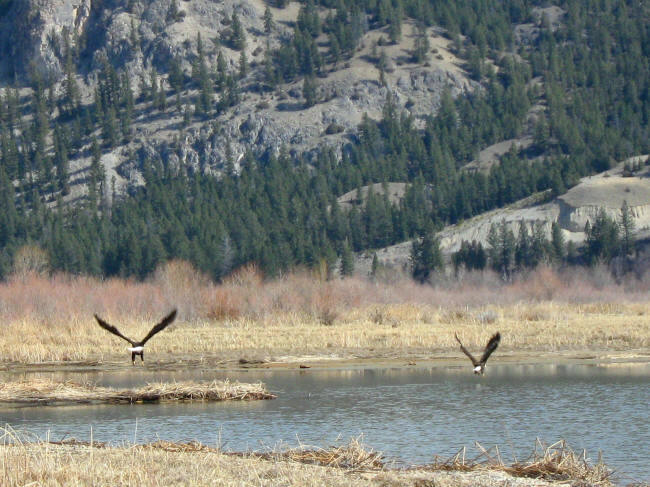
"TWO BALD
HEADED EAGLES IN THE WETLANDS AT THE NORTHWEST CORNER OF COLUMBIA LAKE"
Digital Photo April 9,
2012
"A LOW
TAKE-OFF FOR TWO OVER THE WETLANDS"
Digital Photo April 9,
2012
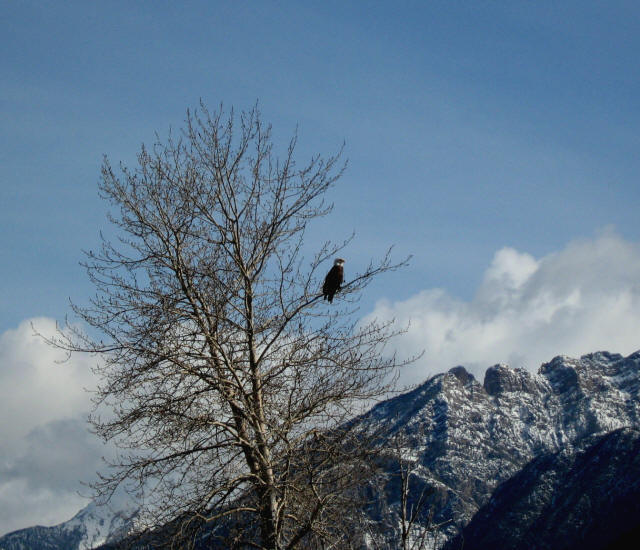
"EAGLE WATCH"
Digital Photo April 7,
2012
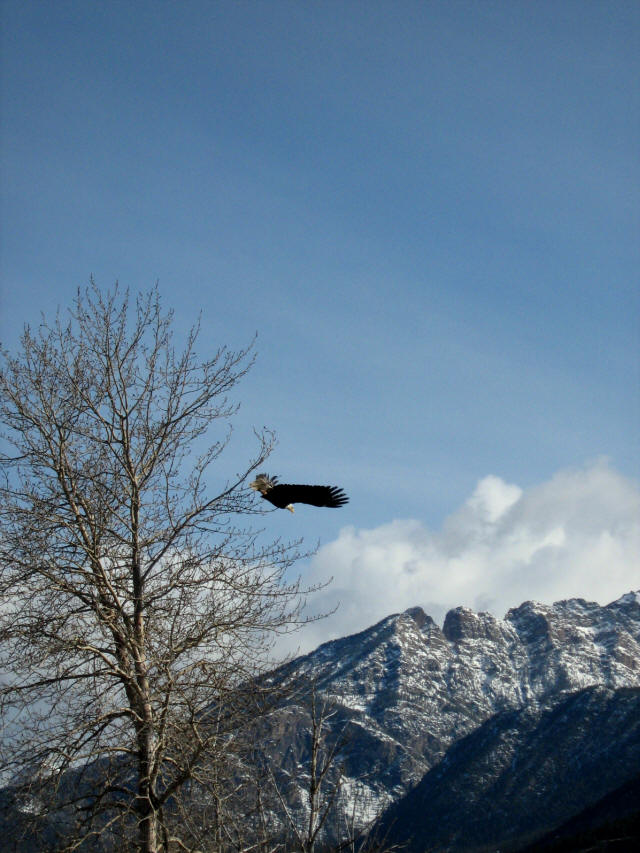
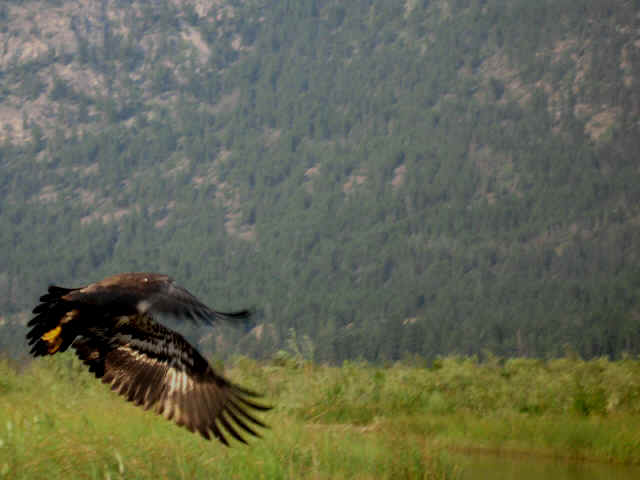
"EAGLE
TAKES FLIGHT"
Digital Photo April 7, 2012
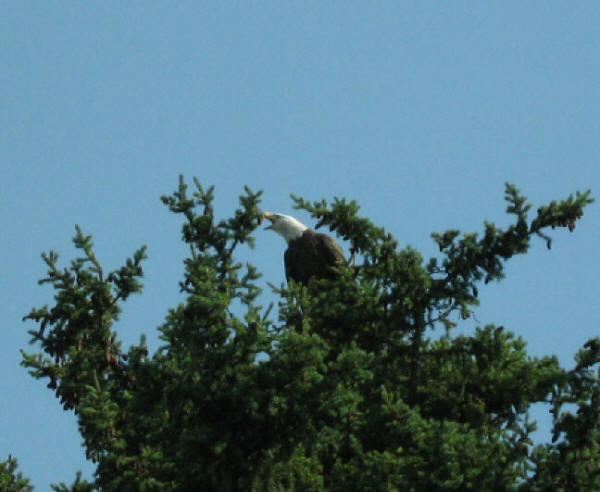
"EAGLE
SPEAK'
Bald Eagle in A Favorite Tree
Near the Mouth of the Columbia River
Digital Photo July 5, 2009
"SCANNING
COLUMBIA LAKE FOR FISH
Digital Photo June 27, 2008
"EAGLE
IN LOW FLIGHT OVER THE MOUTH OF THE COLUMBIA RIVER"
Digital Photo August 13, 2007
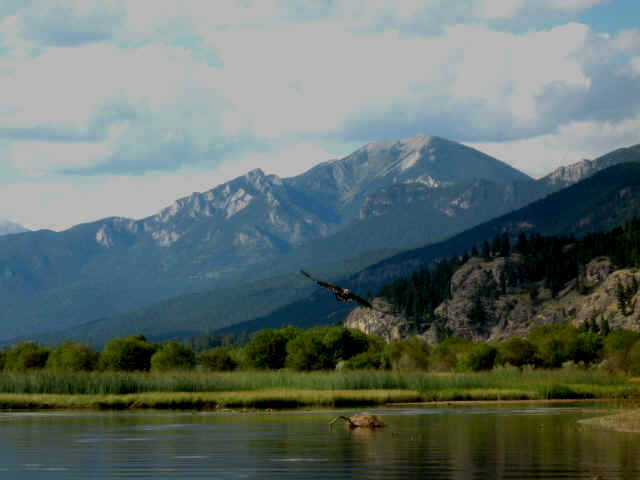
"TAKING
OFF OVER THE WETLANDS"
Digital Photo July 27, 2007
________________________________________
Digital
Photography by Elaine Sell Prefontaine
________________________________________
GREAT BLUE HERON PHOTOS -
CLICK
HERE TO VIEW ART AND PHOTOS OF THE GREAT BLUE HERON
WHOOPER
SWANS
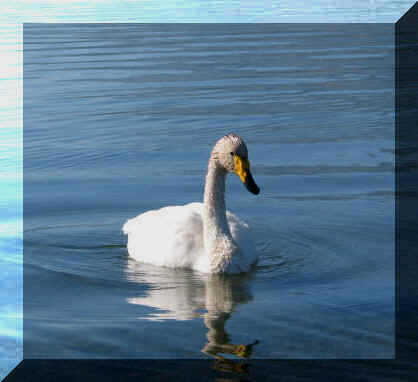
'Making
Friends'
Whooper Swan (Cygnus
cygnus)
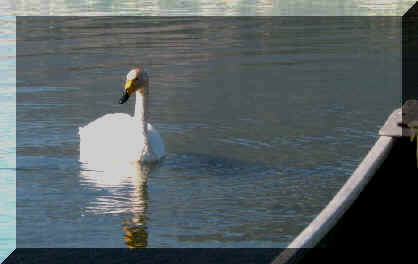
Graceful and lovely, this friendly
Whooper Swan swims towards my canoe.
Columbia Lake, British Columbia, Canada
Digital Photo, September 2002
'Canoe
Inspection'
Whooper Swan (Cygnus
cygnus)
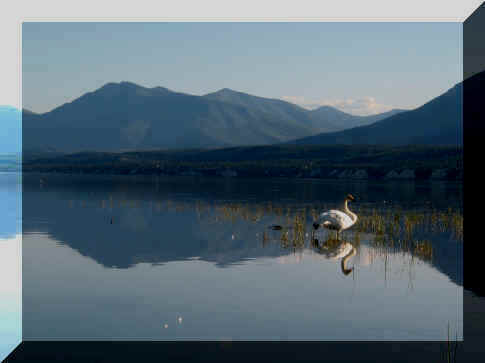
The curious swan comes in for a
closer inspection.
Columbia Lake, British Columbia, Canada
Digital Photo, September 2002
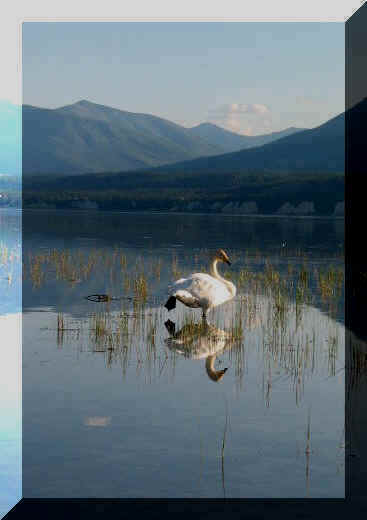
'Columbia
Lake Sentinel'
Whooper Swan (Cygnus
cygnus)
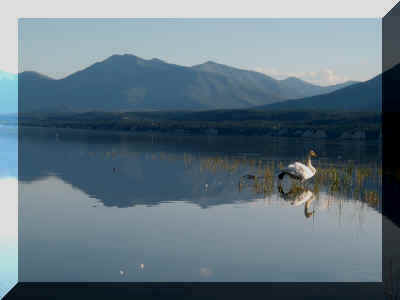
Looking southwest over Columbia Lake
towards the Purcell Mountains
Columbia Lake, British Columbia, Canada
Digital Photo, August 2002
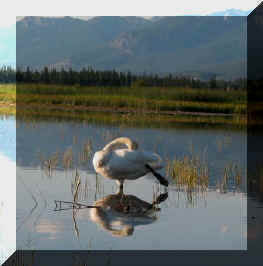
The
Columbia Lake White Swan
Whooper Swan (Cygnus cygnus)
Looking southwest over Columbia Lake
towards the Purcell Mountains
Columbia Lake, British Columbia, Canada
Digital Photo, August 2002
'Preening'
Whooper Swan (Cygnus cygnus)
Taken near the mouth of the Columbia River.
Looking northeast to the Rocky Mountains above Fairmont Hot Springs.
Columbia Lake, British Columbia, Canada
Digital Photo, August 2002
\
NATURE NOTES:
WHOOPER
SWAN
(Cygnus cygnus)
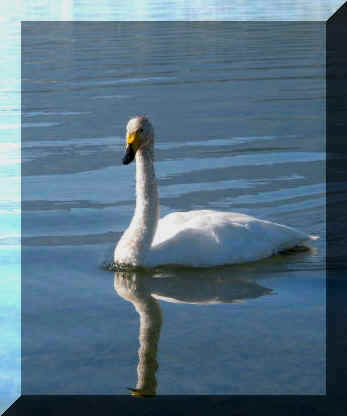
This stately Whooper Swan resembles the Trumpeter Swan but has an extensive
yellow base to its large bill. Its voice is a deep pleasant "whoop".
Length 46" (from tip of bill to tip of
tail), Wingspan 92".
In spite of its serene appearance it can be fierce when protecting its area. Minutes before I took
the August photos
I was amazed to see it chase off three large
dogs who waded in after it. It rose on its feet and propelled itself
across the water while furiously flapping its
huge outstretched wings at the dogs. They were frightened away and the
swan then became briefly airborne before returning to preening itself in the
shallow Columbia Lake waters.
________________________________________
Digital
Photography by Elaine Sell Prefontaine
________________________________________
PILEATED
WOODPECKERS
. |
 |
'Pileated
Pleasures'
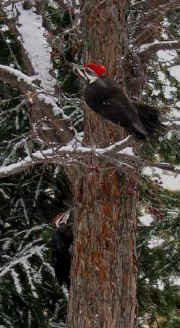
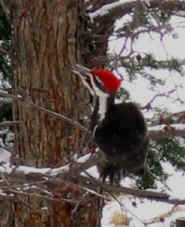
Pileated
Woodpeckers (Dryocopus pileatus)
Digital photos, February 2003
(IMG 132-3289 & 131-3291)
..
(Image 132-3298)
|
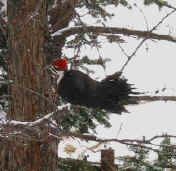
(IMG 132-3297)
|
NATURE NOTES:
PILEATED
WOODPECKER
(Dryocopus pileatus)
Being territorial year
round residents to this part of the Columbia Valley these striking Pileated Woodpeckers
frequently visit the trees in my front yard.
It is a joy to see them and hear their low distinctive
drumming as they peck away in their search for ants, wood boring insects
and their larvae. Woodchips beneath my trees indicate they have been
there.
As can be noted from my pictures there does seem to be a "pecking order" as the
larger male is always higher up in the tree.
The pileated
woodpecker, being the size of a crow is the largest
existing woodpecker in America and is on the endangered species
list. Although they are rare and beautiful they can be
destructive as I have had to repeatedly fill the holes they made in my
cedar chimney.
It is easy to recognize their calls which are a series of loud
"kak-kak-kak-kak's".
The word
"Pileated"
means having a crest which covers the "pileum", which
is at the top of the bird's head from the bill to the nape of the neck.
The male is
mostly black with a brilliant and conspicuous triangular red crest and
mustache.
The female has a smaller red crest, black forehead, and no red
mustache.
They both have bright white lower wing patches which are visible in
flight.
Both parents share the home duties of excavating the nesting cavity,
incubating the eggs and feeding the young.
The
magnificent pileated woodpecker is truly a sight to behold !
Pileated woodpeckers are on the Protected Species List.
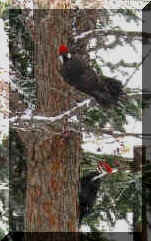
(IMG 132-3290)



|
|
SLATE
STONE ART
The
Home of Modern Day
Petroglyphs
& Pictographs |
Art, Poetry & Photography
© Copyright Elaine Sell Prefontaine
Website Created & Maintained by Elaine Sell Prefontaine
All Rights Reserved.
"Art
purely created, and nakedly witnessed, frees the soul"
Elaine
|
|